Wave Rider
Casual Games


Wave Rider
















| Rating | 4.2 / 5 (10,000 votes) |
| Played | 100,000 times |
| Developer | AZ Games |
| Released | 2025-01-01 |
| Platform | Desktop, Mobile, Tablet |
| Technology | HTML5 |
| Category | Casual Games |
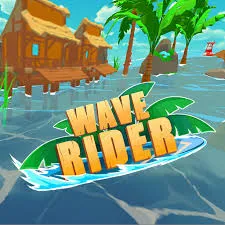
The ocean does not wait for you to be ready. In Wave Rider, a swell builds beneath your board, peaks into a wall of water, and dares you to ride it as far as your balance and nerve will take you. Then it crashes, and you start over, chasing a higher score and a longer ride.
Wave Rider is a browser-based surfing game that captures the rhythm and flow of riding ocean waves. You steer your surfer across the face of procedurally generated swells, launch off the crest for aerial tricks, and try to wring every possible point out of each wave before it breaks. The controls are straightforward, but the timing and wave awareness required to post a top score give the game real depth.
You can play Wave Rider online for free on Wacky Steps with nothing to install and nothing to download.
Understanding the Wave
Before talking about tricks or scores, it helps to understand how waves behave in this game. Every ride follows a natural arc, and reading the wave correctly is the foundation of everything else.
Wave Phases
Each wave you ride progresses through three distinct phases:
The Build
The wave begins as a gentle swell that lifts your board. During this phase, the wave face is mellow and forgiving. Use the build to reposition yourself on the wave, gather speed by cutting diagonally across the face, and plan your first trick attempt. There is no scoring advantage to rushing during the build, but the clock is ticking.
The Peak
The wave reaches maximum height and steepness. This is where the wave face offers the most speed and the biggest launch potential. Tricks performed during the peak score the highest base points. The wave is also at its most dangerous here. Ride too high and you will fly off the back. Mistime a jump and you will land in the turbulence of the breaking crest. The peak is where high scores are made or lost.
The Fade
The wave begins to collapse and lose energy. The face flattens, speed drops, and the rideable area shrinks. Scoring potential decreases during the fade, but there is still time for a few final tricks if you stay in the pocket near the breaking section. Eventually the wave fully dissipates and your ride ends.
Controls: Steering, Jumping, and Tricks
Wave Rider keeps the control scheme tight and intuitive, with the same layout whether you are on a keyboard or a touchscreen.
Keyboard
- Left Arrow / A: Angle your surfer to the left across the wave face
- Right Arrow / D: Angle your surfer to the right across the wave face
- Up Arrow / W / Spacebar: Jump off the wave crest into the air
- Directional Keys While Airborne: Perform tricks. Each direction triggers a different aerial move
Touchscreen
- Left Side of Screen: Steer left
- Right Side of Screen: Steer right
- Swipe Up: Jump
- Swipe Direction While Airborne: Perform tricks corresponding to the swipe direction
Controller
- Left Stick: Steer across the wave
- A Button / Cross: Jump
- Right Stick or Face Buttons While Airborne: Trick inputs
Scoring System: How Points Work
Understanding the scoring breakdown helps you make smart decisions during a ride rather than just mashing tricks and hoping for the best.
Base Trick Points
Every successful trick earns a base point value. Simple tricks like straight aerials score the least. Rotational tricks and grabs score more. The most valuable tricks are the ones that require specific wave positioning and precise jump timing to execute.
Combo Multiplier
Performing multiple tricks in a single aerial sequence builds a combo multiplier. Two tricks in a row gives a modest bonus. Three or four pushes the multiplier into meaningful territory. The catch is that every trick in the combo must be different from the others. Repeating the same move within a combo resets the multiplier back to baseline.
Wave Phase Bonus
Tricks performed during the peak phase earn a bonus modifier on top of their base value. The build and fade phases score at standard rates. This means the peak is where you should concentrate your biggest trick attempts for maximum return.
Clean Landing Bonus
Sticking a clean landing after a trick or combo awards additional points. A rough landing still counts the trick but forfeits the landing bonus. Landing cleanly also preserves your speed and momentum, which sets up the next trick attempt more effectively.
The Trick Roster
Knowing which tricks are available and how to trigger them gives you the vocabulary to build high-scoring combos.
Basic Aerials
The simplest trick in the game. Jump off the wave crest and your surfer automatically performs a basic aerial. Low point value but useful for extending combos when you do not have time for anything fancier.
Grabs
While airborne, press the steer keys to make your surfer grab the board. Different grab variations exist depending on your direction input and the angle of your launch. Grabs score moderately well and are easy to fit between other tricks in a combo chain.
Spins and Flips
Press the jump input again while airborne to initiate rotational tricks. The direction you are traveling when you press it determines whether you spin horizontally or flip vertically. These are your mid-tier scoring moves. They require more airtime to complete, so only attempt them when you have launched from a strong peak position.
Signature Moves
The highest-value tricks in Wave Rider. These require a specific sequence of inputs during a long aerial and score enormous points when landed cleanly. Attempting a signature move with insufficient airtime will result in an incomplete trick, which scores nothing and causes a rough landing. Only go for these when you have a deep launch off a tall peak section.
Strategy: Building a High-Scoring Ride
Random trick attempts will get you through the early waves but will not produce competitive scores. A deliberate approach to each ride yields better results.
Position Yourself on the Upper Wave Face
The upper third of the wave is the sweet spot for speed. Gravity pulls you down the face, building momentum that translates into higher jumps and longer airtime. Riding too low on the wave means less speed and weaker launches. Riding too high risks slipping over the back of the wave, which ends your ride immediately.
Read the Wave Shape Before Jumping
Not every section of the wave is equally suited for launching. Look for the steepest part of the face, usually near where the wave is beginning to break. Launching from a steep section gives you natural upward trajectory without needing to adjust your angle much.
Plan Combo Sequences in Advance
Decide on a combo sequence before you jump, not while you are in the air. Hesitation during an aerial eats into your available airtime and often leads to rushed inputs and rough landings. If you know you want a grab followed by a spin followed by a different grab, commit to that sequence from the moment you leave the wave.
Use the Fade for Safe Points
When the wave enters its fade phase, do not give up. You can still squeeze out points with quick, low-risk aerials and grabs. Avoid attempting ambitious tricks during the fade since the reduced wave energy will not provide enough airtime to complete them. Instead, focus on clean, simple moves that add to your total without the risk of a crash.
Important Notes
- The wave duration varies slightly between rides. Some waves last longer than others, giving you more time to accumulate points. Take advantage of longer waves by pacing your trick attempts rather than rushing.
- Speed is your most valuable resource. Every decision during a ride should be evaluated based on whether it maintains or increases your speed. Slow surfers cannot launch high, and low launches produce weak tricks.
- Touchscreen players should avoid resting their thumb on the screen between inputs. Accidental steering inputs during aerials will interfere with trick execution.
- The visual design of each wave includes subtle indicators of where the peak is forming. Watch for the section where the water color lightens and the surface texture becomes more turbulent. That is your launch zone.
Play Wave Rider on Wacky Steps
The ocean is calling. Play Wave Rider online right now on Wacky Steps and see how long you can ride.
- 100% Free with no purchases or premium content
- No Download Required because the game loads and runs entirely in your browser
- Browser-Based so you can surf on any device with a modern web browser
Hit the Play button above to paddle out and catch your first wave. No installs, no waiting, just pure surfing action from the moment you click.




Discuss Wave Rider
No comments yet. Be the first to share your thoughts!