Slope 2
Action Games




Slope 2
















| Rating | 4.5 / 5 (24,500 votes) |
| Played | 245,000 times |
| Developer | RobKayS |
| Released | 2017-09-01 |
| Platform | Desktop |
| Technology | HTML5 |
| Category | Action Games |
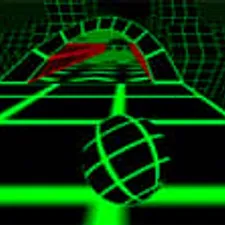
A neon green ball sits at the top of an impossibly steep incline. The moment you press start, gravity takes over. The ball rolls forward, accelerating down the slope, and the only thing standing between you and oblivion is your ability to steer. No enemies, no power-ups, no second chances — just you, the ball, and the merciless physics of an endless downhill run.
When players play Slope 2 online, they often underestimate how something so simple can be so gripping. The answer lies in the physics engine that governs every microsecond of gameplay, turning a basic rolling ball into a masterclass in momentum management.
The Science Behind the Slope
Gravity and Acceleration
Slope 2 is governed by a simulation of gravitational acceleration. Your ball does not move at a fixed speed — it accelerates continuously as it descends. The longer you survive, the faster you travel. This is not an artificial difficulty curve; it is consistent physics, and understanding it is the foundation of high-level play.
The acceleration rate is constant, meaning the difference between your speed at 30 seconds and 60 seconds is exactly the same as the difference between 60 seconds and 90 seconds. This predictability is important — it means the speed increase never surprises you if you are paying attention. The challenge is not that the physics are unfair, but that your reaction time has finite limits.
Momentum and Inertia
Your ball carries momentum. It does not change direction instantly when you press an arrow key — it curves. At low speeds, the curve is tight and responsive. At high speeds, the curve widens dramatically, requiring you to anticipate turns further in advance. This is pure inertia at work, and it is the mechanic that separates Slope 2 from simpler avoidance games.
The Turning Radius Problem
At top speed, your turning radius can be wider than the platform you are trying to stay on. This means by the time you see an edge and try to turn away, physics may have already carried you past the point of no return. The solution is pre-emptive positioning — centering your ball well before you reach dangerous sections, rather than reacting at the last second.
Edge Detection and Fall Physics
The platforms in Slope 2 have defined edges. Once more than half your ball crosses an edge, gravity pulls you down and the run ends. There is no recovery mechanic, no double jump, no safety net. The binary nature of the fall — you are either on the platform or you are not — creates a tension that never dissipates.
The Endless Runner Lab — Analyzing the Obstacle Types
Straight Platforms
The simplest terrain. Wide platforms with gradual curves. Straight sections are your opportunity to center your ball and prepare for whatever comes next. Resist the urge to relax completely — even straight sections can end abruptly with gaps or turns.
Speed Management on Straights
On long straight platforms, the ball reaches its maximum velocity. This speed carries into the next section regardless of what that section looks like. If a sharp turn follows a long straight, the momentum you built up makes that turn far more dangerous. Skilled players gently weave left and right on straight sections to scrub a small amount of speed without fully braking.
Narrow Bridges
Platforms narrow to a fraction of their original width, demanding pixel-perfect positioning. The key to narrow bridges is entering them centered. Trying to correct your position while on the bridge is extremely risky because the margin for error is so thin.
The Approach Technique
Before a narrow bridge, steer to the center of the preceding platform. Enter the bridge at a neutral angle — not drifting left or right. Once on the bridge, make only the tiniest adjustments needed to stay centered. Overcorrection on a narrow bridge is more dangerous than slight drift.
Gap Jumps
Sections where the platform ends completely and resumes after a short gap. Your ball must carry enough forward momentum to cross the gap and land on the other side. Speed is your friend here — slowing down before a gap means you may not clear it.
Calculating the Jump
Gap length varies, but the principle is consistent: the faster you are moving when you reach the gap edge, the further you will travel before gravity pulls you below the level of the next platform. If you can see a gap approaching, maintain or slightly increase speed rather than braking.
Red Block Obstacles
Stationary red blocks placed on the platform surface. Hitting one ends your run instantly. These obstacles force you to steer around them while staying on the platform, often combining with narrow sections to create complex navigation challenges.
The Swerve Pattern
When a red block appears directly in your path, swerving around it requires a smooth arc rather than a sharp turn. Start the arc early, pass the block with comfortable clearance, and smoothly return to center. Jerky, last-second swerves frequently send the ball off the platform edge.
Curved Platforms and Banked Turns
Some sections feature the entire platform tilting at an angle, causing your ball to slide toward the lower edge. Counter-steering against the bank keeps you centered. The amount of counter-steer needed increases with your speed, making banked turns particularly dangerous at high velocities.
Controls
| Input | Action |
|---|---|
| Left Arrow | Steer Left |
| Right Arrow | Steer Right |
The Minimalist Control Scheme
Two buttons. That is everything Slope 2 gives you. The depth comes from how those two inputs interact with the physics engine. Pressing left arrow does not move you left by a fixed amount — it applies a leftward force that combines with your existing momentum, gravity, and the slope angle to produce a curved trajectory. The result is different every time depending on your current speed and direction.
Input Sensitivity
At low speeds, arrow key presses produce visible, responsive direction changes. At high speeds, the same press produces a much subtler shift because the ball's forward momentum overwhelms the lateral force. This is not a bug — it is accurate physics simulation, and it means your inputs must become more deliberate and longer-held as the game progresses.
The Pursuit of Distance
What Constitutes a Good Run
Distance is the sole metric in Slope 2. There are no coins, no multipliers, no bonus objectives. Your score is how far the ball traveled before falling. For new players, surviving past 500 meters is an achievement. Intermediate players aim for 2000 meters. Expert runs push beyond 5000 meters.
The Mental Game
Long Slope 2 runs demand sustained concentration that most players find exhausting. After 90 seconds of high-speed platforming, mental fatigue sets in — reaction time slows, attention wanders, and mistakes that would never happen at minute one start appearing at minute three. Breaking your personal best often has less to do with physical skill and more to do with mental endurance.
Focus Techniques
Play in short sessions of 10–15 minutes rather than marathon attempts. Take a brief break between runs to reset your focus. Some players find that listening to music without lyrics helps maintain concentration by occupying the part of the brain that would otherwise wander.
High-Score Strategy
The Golden Rule: Center Is King
The safest position on any platform is dead center. From the center, you have equal reaction distance to either edge. From the edge, you have almost no margin on one side. Make centering your ball a constant, ongoing priority, not something you do only when danger appears.
Reading the Track Ahead
Your eyes should focus one to two seconds ahead of your ball's current position. The further down the track you can see, the more time you have to prepare for upcoming obstacles. Players who stare at their ball rather than looking ahead consistently crash into obstacles they saw too late.
The Patience Paradox
Counter-intuitively, the best Slope 2 players are often the calmest. Frantic inputs, panicked swerves, and rushed corrections cause more deaths than obstacles themselves. A calm player who makes smooth, deliberate movements survives longer than a tense player who reacts to everything with maximum urgency.
Important Notes
- Slope 2 features flashing neon visuals and rapid color changes that may affect photosensitive players
- The game requires no account or login — start playing immediately
- Performance is optimal on browsers with hardware-accelerated graphics
- Best played on desktop or laptop with a responsive keyboard
- Your high score is tracked locally in your browser session
Play Slope 2 on Wacky Steps
Think you can master the physics and outlast the slope? Start rolling on Wacky Steps at wackysteps.net.
- 100% Free — Unlimited runs, no premium features, completely free
- No Download Required — Play instantly in your browser, zero installation
- Browser-Based — Works on any device with a modern web browser
Stay centered. Stay focused. Stay on the slope.




Discuss Slope 2
No comments yet. Be the first to share your thoughts!