
Chase Rush
Casual Games



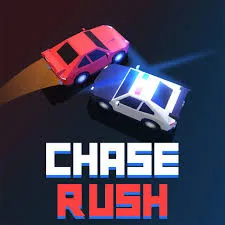
Chase Rush















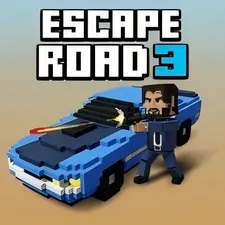

| Rating | 4.2 / 5 (10,000 votes) |
| Played | 100,000 times |
| Developer | AZ Games |
| Released | 2025-01-01 |
| Platform | Desktop, Mobile, Tablet |
| Technology | HTML5 |
| Category | Casual Games |
Sirens behind you. Traffic ahead. A split-second decision between threading a gap between two trucks or swerving onto the shoulder. Chase Rush throws you into the middle of a high-speed pursuit where every lane change is a gamble and every second of survival is an achievement. This is not a leisurely driving game. This is pure escape artistry at velocity.
The Pursuit: What You Are Up Against
You start each run of Chase Rush already in motion. Your vehicle rockets forward on a multi-lane road while pursuers trail behind and traffic fills the lanes ahead. Your mission is deceptively straightforward: do not crash, do not get caught, and survive as long as possible. The speed increases relentlessly, traffic density rises, and the margin for error shrinks until one mistake ends everything.
The thrill of Chase Rush comes from its constant state of tension. There is no safe moment to relax. Every second presents new obstacles, and the satisfaction of weaving through a seemingly impossible gap at top speed is what keeps you restarting after every crash.
Escape Route Planning
The defining skill in Chase Rush is not reaction speed -- it is route planning. Reacting to the obstacle in front of you is too slow at high velocities. You need to be reading the traffic two or three rows ahead and planning your path through it before you arrive.
The Look-Ahead Technique
Divide your screen into three zones. The closest zone is immediate danger -- obstacles you must dodge right now. The middle zone is your planning zone -- traffic you need to route around in the next second. The far zone is your preview zone -- incoming patterns you can start preparing for.
How Far Ahead to Look
At the start of a run when speeds are moderate, looking two rows ahead is sufficient. Once the pace picks up, shift your focus to three or even four rows ahead. The faster you are moving, the further in advance you need to plan because your reaction window shrinks proportionally.
Identifying Escape Lanes
Scanning the road ahead, look for the lane with the most open space. This is your escape lane -- the path of least resistance. Commit to your escape lane early and adjust only when a better option appears. Constant lane-switching is slower and more dangerous than committing to a clear path.
The Danger of the Fast Lane
The leftmost lane often has the fastest-moving traffic and the most trucks. It is tempting because it feels like the passing lane, but the density of large vehicles makes it one of the most dangerous positions on the road. Use it when it is clear, but do not default to it.
Gap Sizing
Not all gaps between vehicles are equal. A gap that looks passable at moderate speed becomes impossible at high speed because your vehicle covers more ground during the lane change. Learn to judge gaps relative to your current speed rather than their absolute size on screen.
Traffic Types and How to Handle Them
Cars
Standard passenger cars are the most common obstacle. They are relatively small and leave usable gaps on either side. Cars sometimes change lanes, so watch for lateral movement even after you think you have a clean lane.
Trucks
Large, slow-moving trucks occupy more lane space and leave narrower gaps. Passing between two side-by-side trucks is almost never possible. Treat trucks as lane-blocking obstacles and route around them entirely.
The Truck Corridor
When multiple trucks appear in adjacent lanes, they create a corridor with only one open lane. Identify the open lane early and move into it before you reach the corridor. Entering a truck corridor at high speed with no plan is how most runs end.
Motorcycles
Fast and narrow, motorcycles dart between lanes unpredictably. They are harder to spot but easier to dodge because they do not block much space. The real danger is being surprised by a sudden lane change from a motorcycle you did not notice.
Moving Obstacles
Some vehicles actively change lanes in front of you. Watch for turn signals or lateral drift and adjust your route before they complete their lane change. A vehicle drifting into your lane forces an immediate evasive move that might put you in the path of another obstacle.
Controls
Chase Rush supports multiple input methods for accessibility.
Keyboard
- Up Arrow / W: Accelerate (temporary speed boost)
- Down Arrow / S: Brake (briefly slow down)
- Left Arrow / A: Steer left
- Right Arrow / D: Steer right
Touch and Mobile
- Swipe Left: Move to the left lane
- Swipe Right: Move to the right lane
- Swipe Up: Activate speed boost
- Swipe Down: Brake
Power-Ups and Pickups
Boost
Temporarily increases your speed dramatically. During a boost, you become temporarily invincible -- traffic passes through you. Use boosts during the densest traffic sections to cheat through impossible situations.
Shield
Absorbs one collision. The shield is your emergency escape. Unlike the boost, it does not help you avoid crashes -- it forgives one. Save your shield for situations where no evasive maneuver could save you.
Score Multiplier
Doubles all point accumulation for a limited time. Multiplier pickups are rare and extremely valuable. When active, prioritize pure survival because every second of extended play is worth double.
Scoring Strategy
Your score in Chase Rush is primarily determined by distance traveled. The longer you survive, the higher your score climbs. Power-ups and near-misses award bonus points. A near-miss -- passing within a hair's width of a vehicle without colliding -- gives a small score bonus and a satisfying audio cue.
The Near-Miss Gambit
Experienced players sometimes intentionally thread tight gaps for the near-miss bonus. This is a high-risk, high-reward strategy that can significantly boost your score but dramatically increases the chance of a run-ending collision. Only attempt near-misses when you are confident in the gap size.
Important Notes
- Speed never stops increasing. There is no maximum velocity. Eventually, the game outpaces human reaction time. This is intentional.
- Sound cues matter. The engine pitch changes with speed, and audio warnings signal nearby vehicles in your blind spots.
- Braking is underutilized. A brief tap of the brakes can turn an impossible gap into a survivable one. Do not forget you have a brake.
- Fatigue kills runs. Your reaction time degrades noticeably after fifteen minutes of intense play. Short sessions yield better results than marathon attempts.
Play Chase Rush on Wacky Steps
Hit the gas, dodge the traffic, and outrun everything behind you. Play Chase Rush online at Wacky Steps for the ultimate high-speed escape.
- 100% Free -- Unlimited chases, zero cost, no paywalls
- No Download Required -- Start your pursuit evasion immediately in the browser
- Browser-Based -- Smooth performance on desktop and mobile devices
You May Also Like
Discuss Chase Rush
No comments yet. Be the first to share your thoughts!