Snow Rider 3D
Racing Games



Snow Rider 3D












| Rating | 4.4 / 5 (240,000 votes) |
| Played | 2,400,000 times |
| Developer | AZ Games |
| Released | 2024-01-10 |
| Platform | Desktop, Mobile, Tablet |
| Technology | HTML5 (Unity WebGL) |
| Category | Racing Games |
Frost bites at your cheeks as your sled rockets down a steep mountainside. Pine trees blur past on either side. A ramp appears — you hit it at full speed and soar over a frozen creek, landing hard but upright on the other side. The slope steepens. The obstacles multiply. And somewhere ahead, buried in the snow, gifts wait to be collected.
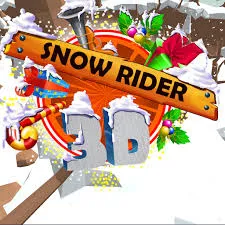
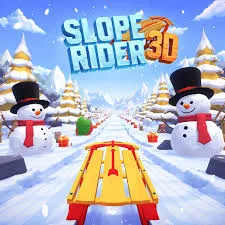
Welcome to Snow Rider 3D, the downhill sledding game that captures the thrill of winter sports without requiring you to bundle up. When you play Snow Rider 3D online, you get instant access to a beautifully rendered alpine world filled with dangerous terrain and rewarding runs.
The Mountain Awaits
Your Sled, Your Rules
You start each run at the top of a procedurally generated mountain. The terrain changes with every attempt, ensuring no two runs are identical. Slopes range from gentle beginner-friendly inclines to near-vertical drops that test your nerve and your reflexes in equal measure.
Your sled responds to every input with realistic physics. Lean forward to accelerate on downhills. Lean back to slow down and maintain control on steep sections. The weight distribution between front and back determines whether you glide smoothly or tumble spectacularly.
The Alpine Environment
Snow Rider 3D renders its world in crisp 3D with genuine atmosphere. Snow particles kick up behind your sled. The lighting shifts as you descend through different elevations. Distant mountain peaks frame the horizon, giving you a sense of scale and descent that makes each run feel like a real journey.
Terrain Analysis — Reading the Mountain
Snow Types and How They Affect You
Packed Powder
The standard surface. Predictable grip, consistent speed, and reliable turning. Most of the early mountain is packed powder, giving you a safe environment to learn the controls and develop your instincts.
Icy Patches
Frozen sections that dramatically reduce your turning ability. When you hit ice, your sled wants to continue in a straight line regardless of your steering input. Approach icy patches at controlled speeds and plan your angle before you reach them, because correction mid-ice is nearly impossible.
Deep Snow
Thick snowdrifts that slow your sled significantly. Deep snow appears as slightly raised, textured areas on the slope. They act as natural speed bumps — useful when you need to reduce velocity, problematic when you are trying to maintain momentum through a jump approach.
Natural Obstacles
The mountain is littered with hazards that demand constant attention:
- Pine Trees: Immovable and deadly on contact. Steer wide around them, especially at high speed
- Rock Formations: Partially buried boulders that can launch or stop your sled depending on your angle of approach
- Ice Walls: Vertical barriers of ice that block entire sections of the slope. Find the gaps or jump over them
- Log Bridges: Narrow wooden paths over chasms. Riding them requires precise centering — drift off the edge and you fall
- Snow Mounds: Ramps formed by accumulated snow. Hit them with speed to catch air and clear ground-level obstacles
Controls
| Input | Action |
|---|---|
| Left Arrow | Steer Left |
| Right Arrow | Steer Right |
| Up Arrow | Lean Forward / Accelerate |
| Down Arrow | Lean Back / Brake |
| Mouse Movement | Alternative steering (when enabled) |
Keyboard vs. Mouse Steering
Both input methods work, but they feel distinctly different. Keyboard steering provides sharp, digital inputs — you are either turning or you are not. Mouse steering offers analog precision, allowing for gradual, nuanced movements. For technical sections requiring precise line choice, mouse control has the edge. For fast, reactive dodging, keyboard works well.
The Physics of Leaning
Leaning forward with the up arrow shifts your weight toward the front of the sled, increasing downhill speed but reducing turning responsiveness. Leaning back with the down arrow shifts weight rearward, slowing you down but improving maneuverability. The ideal stance changes constantly based on terrain — lean forward on straightaways, sit back when approaching technical sections.
Gift Collection and Scoring
The Gift System
Gifts are scattered across the mountain at various points along your descent. They appear as wrapped presents in different colors, each worth different point values. Collecting gifts serves dual purposes: boosting your score and unlocking cosmetic sled upgrades.
High-Value Gift Locations
Gifts are not distributed randomly. The most valuable gifts appear in hard-to-reach locations — on narrow ledges, at the end of log bridges, or hovering over chasms that require precise jumps. The game rewards risk-taking with higher scores, creating a constant tension between safe runs and high-reward paths.
Distance Scoring
Beyond gifts, your distance traveled contributes significantly to your final score. Every meter you descend adds to your total. A long, conservative run might score higher than a short run packed with gifts if the distance difference is substantial enough.
Advanced Mountain Techniques
The Speed Tuck
When the slope opens up with no obstacles ahead, lean fully forward to enter a speed tuck. Your sled accelerates to its maximum velocity, building momentum that carries you through subsequent flat sections and powers bigger jumps. The risk is reduced control — if an obstacle appears unexpectedly during a tuck, you have less time to react.
Air Control
When your sled launches off a ramp or mound, you retain limited control in the air. Subtle left and right inputs can adjust your landing position, helping you avoid obstacles on the other side of jumps. Large mid-air corrections cause instability on landing, so keep adjustments small.
The Bail-Out
Sometimes the best decision is to deliberately crash into a small obstacle to stop your momentum before a larger hazard. Hitting a snow mound or small rock at controlled speed hurts your score far less than plunging off a cliff because you were going too fast to steer.
Tips for Longer Runs
Scan ahead constantly. Your eyes should be focused two to three seconds down the slope at all times. By the time an obstacle is right in front of you, it is too late to react.
Moderate your speed. Going fast feels thrilling, but survival depends on controlled speed. Build speed on clear sections, then manage it before technical areas.
Learn the audio cues. The sound of your sled changes based on surface type. Ice makes a distinctive scraping sound, and deep snow produces a muffled rumble. Listening helps you react to terrain changes even before you see them.
Follow the gift trail. Gifts are often placed along viable paths through obstacle-dense sections. If you see a line of gifts, following them usually leads through a navigable route.
Important Notes
- The game generates new terrain on each run, so memorization is not possible — you must rely on reflexes and terrain reading
- Performance is best on modern browsers with hardware-accelerated 3D rendering
- Gift collection progress is saved within your browser session
- The game works on both desktop and tablet devices with compatible browsers
- No account creation is needed — just click play and start descending
Play Snow Rider 3D on Wacky Steps
Ready to carve fresh tracks down the mountain and collect every gift along the way? Grab your sled on Wacky Steps at wackysteps.net.
- 100% Free — Full mountain access, no premium content, no hidden fees
- No Download Required — Hit the slopes instantly in your web browser
- Browser-Based — Works on any device with a modern browser and internet connection
Bundle up. Push off. Ride the mountain.
Discuss Snow Rider 3D
No comments yet. Be the first to share your thoughts!