
Ball Orbit
Casual Games




Ball Orbit


















| Rating | 4.2 / 5 (10,000 votes) |
| Played | 100,000 times |
| Developer | AZ Games |
| Released | 2025-01-01 |
| Platform | Desktop, Mobile, Tablet |
| Technology | HTML5 |
| Category | Casual Games |
Gravity, momentum, and split-second decisions. Ball Orbit reduces gaming to its purest form: one ball, one orbit, one button. But do not let the simplicity fool you. Behind the minimalist design lies a game that demands deep concentration, rhythmic timing, and an almost meditative focus. Every tap reverses your trajectory, and every reversal is a gamble between survival and collision.
Entering Orbit: What This Game Is About
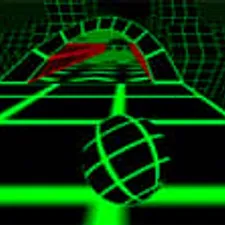
Ball Orbit places you in control of a sphere traveling along a circular path. Obstacles appear along the orbital track, and your only tool is a direction reversal -- click or tap to flip which way your ball orbits. The gaps between obstacles are your lifelines, and threading through them at increasing speeds requires the kind of focus that makes the rest of the world fade away.
What separates this game from other casual titles is its trance-inducing quality. The smooth animations, the steady rotation, and the escalating tempo create a flow state that is genuinely absorbing. You can play Ball Orbit online during a quick break or lose yourself in it for an hour -- it works either way.
The Physics of Orbiting
Understanding Orbital Direction
Your ball moves along a fixed circular track. At any given moment, it travels either clockwise or counterclockwise. A single click reverses this direction. The ball does not stop or slow down during a reversal -- it simply starts moving the opposite way along the same path. This means your ball's position relative to upcoming obstacles changes instantly with each tap.
The Momentum Window
There is a brief moment after each direction change where your ball is accelerating back to full orbital speed. During this window, your ball moves slightly slower than normal. In the early stages, this deceleration is negligible. At higher speeds, however, those fractions of a second matter. Timing your reversals too close together leaves you crawling through danger zones.
Orbital Speed Progression
The game does not punish you with sudden difficulty spikes. Instead, orbital speed increases gradually over time. The first thirty seconds feel almost leisurely, giving you time to learn the rhythm. By the two-minute mark, obstacles arrive fast enough that every tap needs to be premeditated rather than reactive.
Path Prediction: Seeing the Future
The single most important skill in Ball Orbit is the ability to read ahead. Staring at your ball's current position is a recipe for failure. You need to be looking at what is coming next and calculating whether a direction change now will put you in the clear.
Gap Detection
Obstacles in Ball Orbit always leave a gap -- there is always a way through. Your job is to identify the gap and determine whether your current direction will carry you through it naturally or whether you need to reverse. Gaps vary in width, and narrower gaps require more precise timing.
Wide Gaps vs. Narrow Gaps
Wide gaps give you a generous margin of error. You can reverse direction slightly early or late and still slip through. Narrow gaps demand near-perfect timing. As a general strategy, plan your approach to wide gaps first -- they provide safe harbors where you can adjust your rhythm before tackling tighter passages ahead.
Multi-Obstacle Sequences
Later in a run, you will encounter sequences where three or more obstacles appear in quick succession. Each one requires a decision: reverse or continue. These sequences test your ability to chain multiple direction changes together without losing track of your position. The key is to plan the entire sequence before entering it, rather than making reactive decisions obstacle by obstacle.
Controls
The beauty of Ball Orbit lies in its single-input design.
- Click or Tap: Reverse the orbital direction of your ball
- That is the entire control scheme
No keyboard required. No complex combinations. The depth comes from timing, not inputs.
Achieving High Scores
Rhythm Over Reaction
The best players do not react to obstacles -- they anticipate them. Developing a rhythm for when direction changes are needed transforms the game from a stressful dodge-fest into a flowing, almost musical experience. Many high-level players report entering a meditative state where the reversals happen almost automatically.
The Patience Principle
Paradoxically, the most common mistake is reversing too often. Every unnecessary direction change is an opportunity to collide with an obstacle you would have avoided by simply staying the course. Before each tap, ask yourself: is this reversal actually necessary?
Recovery After Mistakes
A near-miss tends to rattle players, leading to a cascade of panicked taps. If you barely squeeze through a gap, resist the urge to immediately reverse. Take a breath, reset your focus, and resume your rhythm. Panic is the number one cause of run-ending mistakes.
Important Notes
- The game rewards consistency over heroics. Steady, well-timed reversals always outperform flashy, aggressive play.
- Your peripheral vision is your best friend. Train yourself to notice obstacles before they reach your immediate vicinity.
- Sound can help with timing. If the game has audio cues, use them to establish rhythm.
- The difficulty never stops increasing. There is no plateau. Your eventual failure is guaranteed, which makes every new personal best genuinely meaningful.
Play Ball Orbit on Wacky Steps
Ready to find your rhythm in the orbital void? Play Ball Orbit online and discover how addictive a single button can be.
- 100% Free -- No purchases, no ads blocking your path
- No Download Required -- Load the game instantly in any modern browser
- Browser-Based -- Works flawlessly on desktops, tablets, and phones




Discuss Ball Orbit
No comments yet. Be the first to share your thoughts!